
Many startup founders spend months building a big product, only to find that customers wanted something different. A minimum viable product (MVP) avoids that trap: it is the smallest version of your product that solves a real problem well enough for early customers to use, and ideally pay for.
Step 1: Validate the problem
Before writing code, confirm that the problem is real and painful.
- Talk to at least 15 to 20 potential customers.
- Ask how they solve the problem today and what it costs them in time or money.
- Look for people already paying for workarounds, such as spreadsheets, freelancers or clumsy tools.
If people do not care much about the problem, no feature list will save the product.
Step 2: Define the core workflow
Identify the one job your product must do brilliantly. Write the main user journey from sign-up to the moment the user gets value. Everything not needed for that journey can wait.
Step 3: Prioritise features ruthlessly
Sort features into must-have, should-have and later. A typical SaaS MVP includes:
- Sign-up, login and password reset.
- The core workflow that solves the main problem.
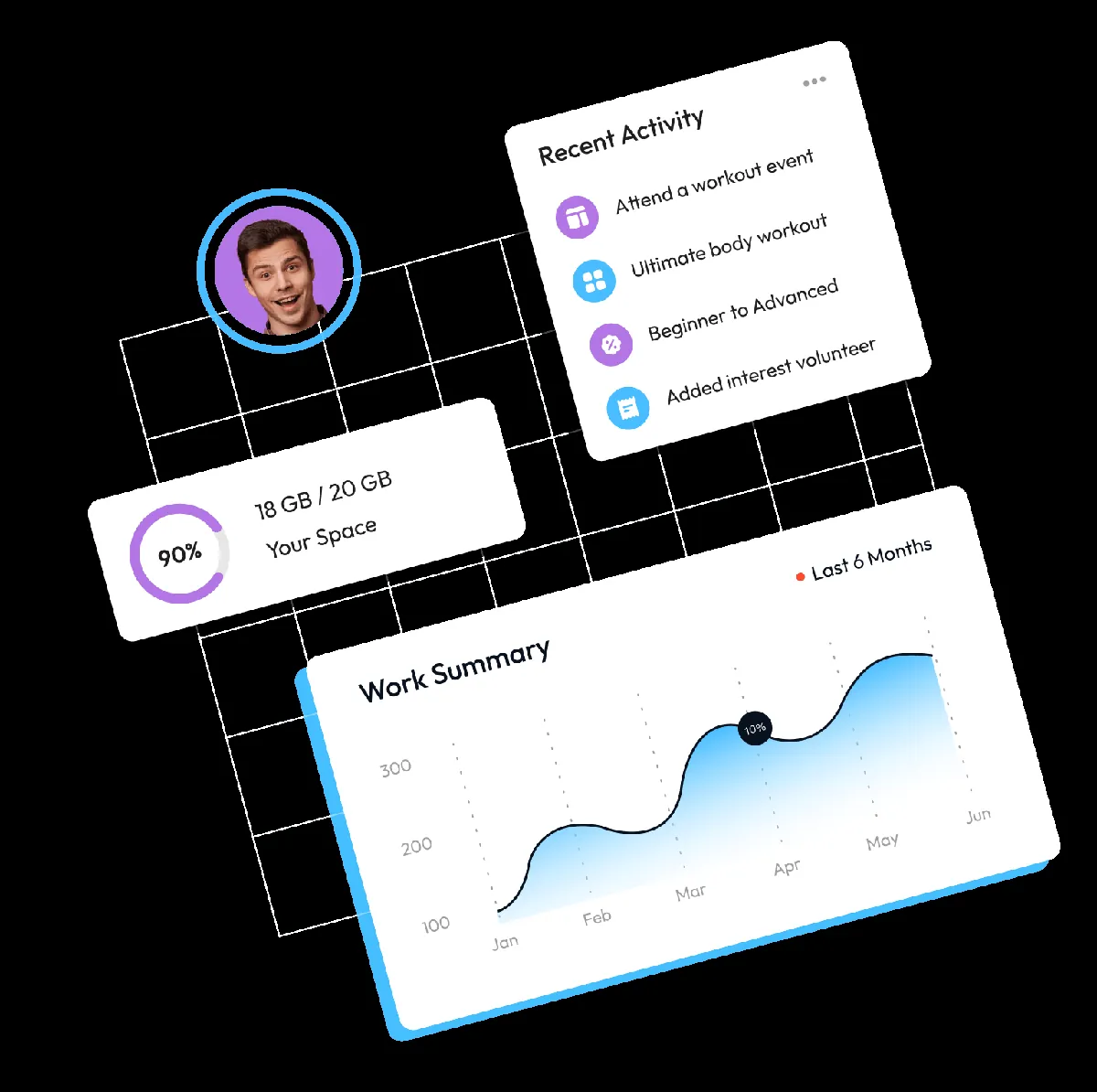
- A simple dashboard.
- Basic settings and user management.
- Payments or a clear path to paid plans.
- Essential emails or notifications.
Step 4: Choose a practical tech stack
Pick proven, well-supported technology your team can move fast with. Common choices include React or Next.js for the front end, Node.js, Python or PHP frameworks for the back end, PostgreSQL or MySQL for the database, and AWS, Google Cloud or Azure for hosting.
Plan for multi-tenancy from the start, so each customer's data is separated securely, even if you keep the implementation simple at first.
Step 5: Design for clarity
Early users forgive missing features but not confusion. Keep the interface clean, guide new users through onboarding and make the first success happen quickly.
Step 6: Build in short cycles
Work in one- or two-week sprints. Release to a small group of early users as soon as the core workflow works, and gather feedback continuously.
Step 7: Add payments early
Charging, even a modest amount, is the strongest validation. Indian SaaS products commonly use gateways such as Razorpay or Stripe for subscriptions. Keep pricing simple at launch.
Step 8: Launch and measure
Track activation (users reaching the key value moment), retention (users who come back), conversion to paid, and churn. Talk to users every week.
Step 9: Iterate
Use data and conversations to decide what to build next. Improve the core workflow before adding new features.
Common MVP mistakes
- Building too many features before launch.
- Skipping customer interviews.
- Ignoring security and data protection.
- Choosing an exotic tech stack that is hard to hire for.
- Waiting for perfection instead of learning from real users.
Conclusion
A great SaaS MVP is focused, usable and in customers' hands quickly. Validate the problem, build the core workflow, charge early and let real usage guide your roadmap.
Codingrim is a SaaS product development company helping startups across Tamil Nadu and India go from idea to launch, with cloud deployment built in. Discuss your SaaS idea.
Frequently Asked Questions
What is a SaaS MVP?
A SaaS MVP (minimum viable product) is the smallest version of a software-as-a-service product that solves a real problem well enough for early customers to use and ideally pay for.
How long does it take to build a SaaS MVP?
A focused SaaS MVP commonly takes around two to four months, depending on the complexity of the core workflow, integrations and design.
What features should a SaaS MVP include?
Sign-up and login, the core workflow that solves the main problem, a simple dashboard, basic settings, essential notifications and a way to pay or upgrade.